
Fuel-Saving Secrets UK Drivers Swear By (Stop Wasting Petrol!)
Want to reduce your fuel costs? Try these eco-driving tips:
Drive at a steady, moderate speed.
Avoid hard braking and rapid acceleration.
Remove extra weight from your car.
Keep tires properly inflated.
Turn off the engine if idle for more than a minute.
Smart driving = more miles, less money. 🚙💰
During the past years, fuel prices have become a regular headache for most UK drivers. With every jump of just a few pence for either petrol or diesel, daily commutes, school runs, and weekend excursions suddenly seem to become so much more costly. But here’s the thing: most drivers waste fuel without even knowing it.
Whether it be a small hatchback, a hybrid, or a large diesel car, it’s the way you actually drive it that makes the most difference to what you spend. Small changes can save UK drivers hundreds of pounds per year.
In this guide, you’ll learn:
l When fuel consumption is at its highest
l What will reduce fuel consumption
l What does fuel-efficient driving achieve
l What eco-safe driving achieve
l What’s most likely to waste fuel
l How to avoid wasting fuel
l Which driving technique can help you save fuel
l How driving smoothly saves money
l Real mpg conversions like 45 mpg to L/100km
l Fuel-saving secrets UK drivers swear by
Why Fuel Consumption Matters for UK Drivers
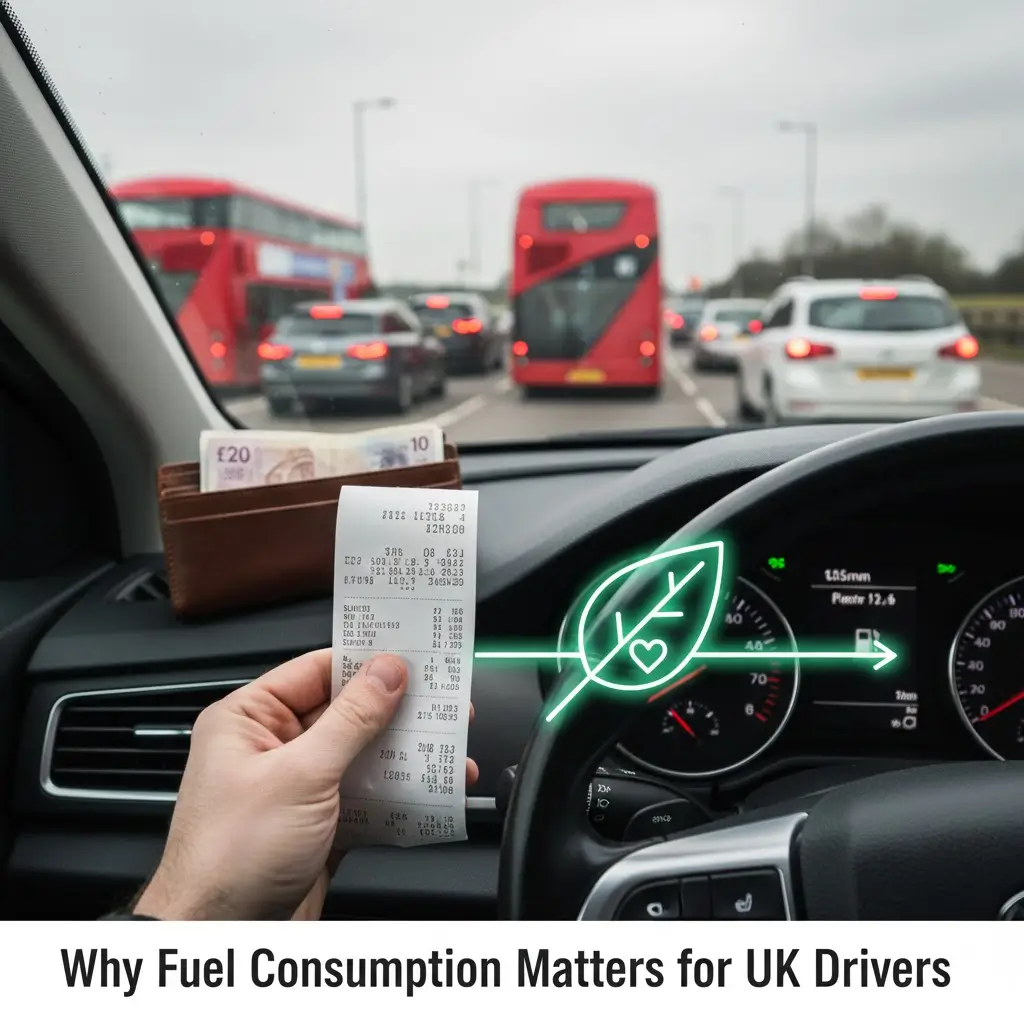
Fuel is one of the biggest ongoing costs for drivers. Insurance, tax, MOT, and servicing are yearly expenses — but fuel is a cost that hits your wallet every single week.
This is why eco-safe and fuel-efficient driving techniques are now part of UK driving tests and intensive driving courses. Driving instructors teach learners how to control the car in a way that reduces fuel use because:
l You save money
l You reduce wear on the car
l You lower emissions
l You drive safer
When Is Fuel Consumption at Its Highest?
Understanding this question will help you to avoid those worst fuel-wasting moments. The highest fuel consumption happens:
1. Driving Uphill
Engines work harder climbing, especially in lower gears. Hills = higher MPG loss.
2. Stop-Start Traffic
One of the major reasons your miles per gallon drop while driving in towns and cities is because of the constant braking and acceleration.
3. Cold Starts
A cold engine uses more fuel until it reaches running temperature. Winter mornings? Expect poor mpg.
What Will Reduce Fuel Consumption? (Simple UK Driving Tips)
If one is to save money, here are the best habits that are proven to help an individual reduce fuel consumption.
1. Maintaining a Steady Speed
Driving at a constant regulated speed is less fuel-intensive compared to driving under conditions of constant acceleration and braking.
2. Early Gear Changes
Driving instructors in the UK teach changing up around 2,000–2,500 rpm.
Lower revs = less fuel burned.
3. Keep Tyres at the Correct Pressure
Under-inflated tyres increase the rolling resistance and result in as much as 10% more fuel waste.
4. Removing Extra Weight
Boot full of tools? Unneeded items? Roof boxes?
All these cause drag and weight — and waste fuel.
5. Switch Off the Engine When Stopped
Idling burns fuel for nothing. Modern cars have start-stop features for this reason.
6. Use Air Con Carefully
Air con is only cheap to use at higher speeds. At slow speeds, it can increase fuel use noticeably.
7. Plan Your Journey
Take less crowded routes whenever possible. When possible, avoid rush-hour. Combine trips rather than taking several short runs.
These little things add up fast.
What Does Fuel Efficient Driving Achieve?
A few major highlights of fuel-efficient driving are :
1. Lower Fuel Bills
Drivers who use eco-safe habits often save £300–£800 per year, depending on mileage.
2. Fewer Emissions
Cleaner, more responsible driving lowers your carbon footprint.
What Does EcoSafe Driving Achieve? (Direct from UK Driving Standard)
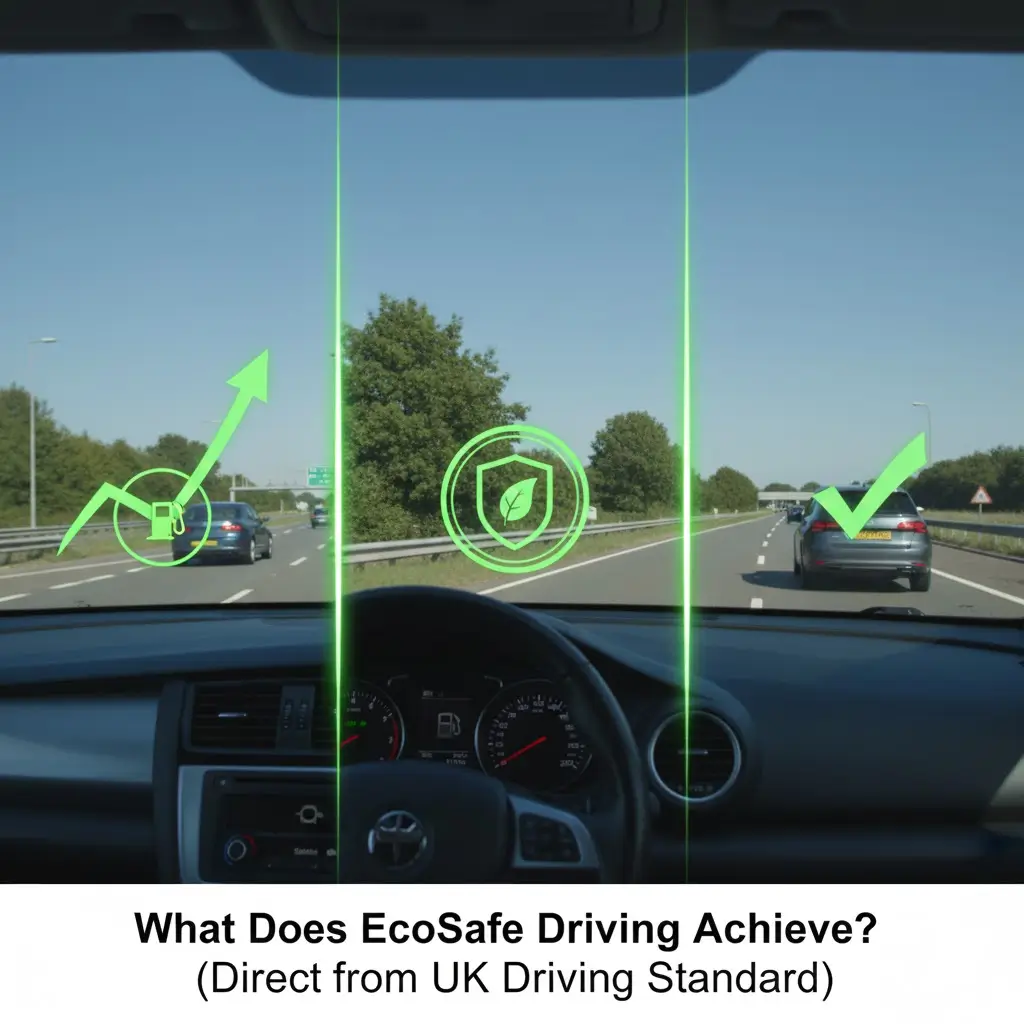
EcoSafe driving is part of the DVSA guidance used in UK driving tests. It focuses on:
l Hazard awareness
l Forward planning
l Smooth control
l Safe following distances
l Reducing unnecessary acceleration
EcoSafe driving achieves:
l Lower emissions
l Reduced fuel usage
l Better anticipation
l Smoother control of the vehicle
l Safer decision-making
l A calmer driving experience
Learners taking intensive driving courses are taught these techniques to pass the test and reduce running costs.
What’s Most Likely to Waste Fuel?
UK drivers commonly waste fuel through:
1. Harsh acceleration
Nothing wastes more fuel than flooring the accelerator.
2. Driving too fast
Speeds over 70 mph can reduce mpg by 15–25%.
3. Incorrect tyre pressure
Low tyres = guaranteed fuel waste.
4. Carrying unnecessary weight
Roof racks, tools, sports equipment — all cause drag.
5. Short journeys
Engines never warm up, so fuel efficiency drops.
6. Idling the engine
Idling gets 0 mpg. Completely wasted fuel.
What’s Most Likely to Increase Fuel Consumption?
l You accelerate rapidly
l You drive in low gears at high revs
l You sit in traffic
l You keep the air con on full
l You drive with windows open at high speed
l You brake late and accelerate often
What Can You Achieve If You Drive Smoothly?
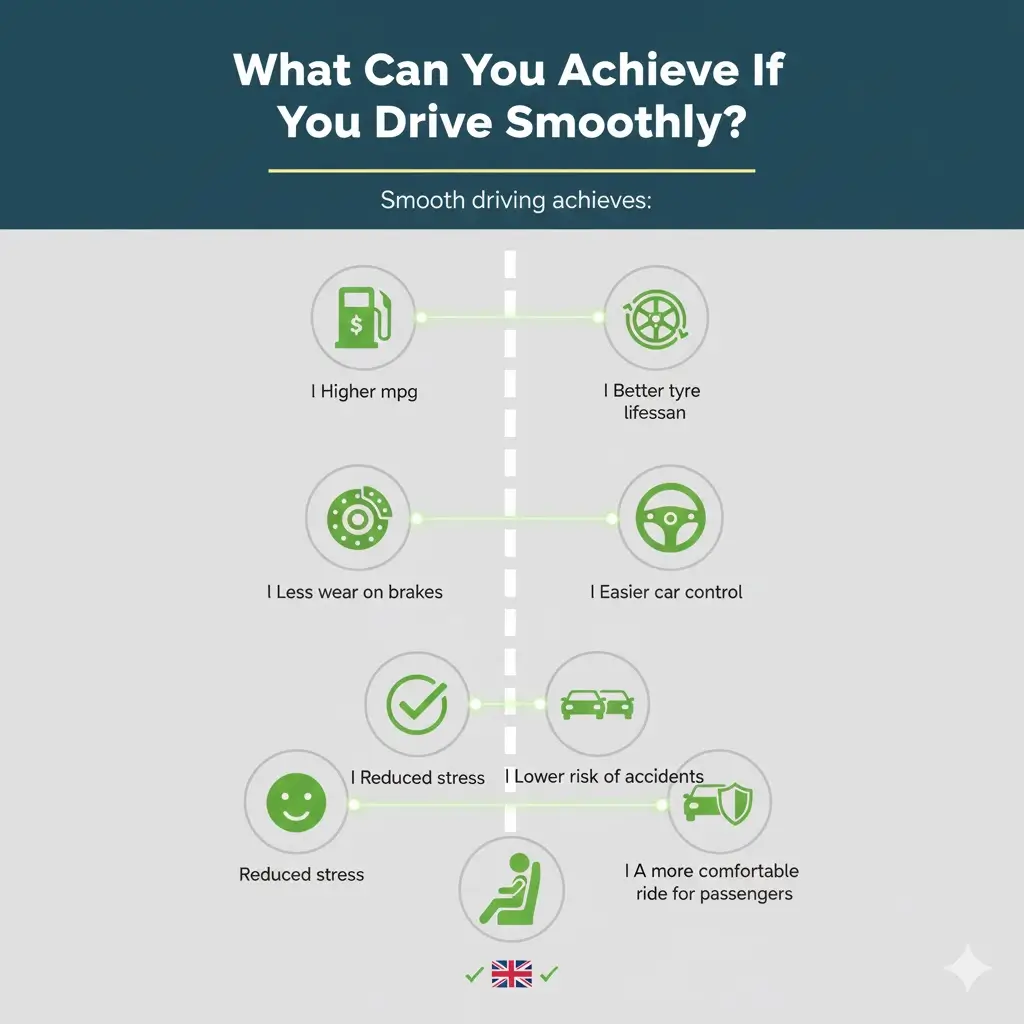
Smooth driving achieves:
l Higher mpg
l Less wear on brakes
l Better tyre lifespan
l Easier car control
l Reduced stress
l Lower risk of accidents
l A more comfortable ride for passengers
Which Driving Technique Can Help You Save Fuel?
This means:
l Looking far ahead
l Keeping a safe distance
l Avoiding sudden braking
l Timing traffic lights
l Slowing down naturally instead of braking hard
l Staying in the highest safe gear
This is exactly what UK driving instructors teach during intensive lessons.
How to Avoid Wasting Fuel (Practical UK Tips)
1. Avoid Revving the Engine
Revving is pure fuel waste.
2. Drive in the Highest Safe Gear
Higher gears reduce engine workload.
3. Keep Your Car Serviced
Clean filters and good oil improve combustion.
4. Combine Trips
A warm engine is more efficient.
5. Keep Speed Between 50–60 mph
The sweet spot for most cars.
6. Turn Off Air Con When Not Needed
At low speeds, A/C increases fuel use significantly.
7. Remove Roof Boxes When Not Needed
Roof boxes add huge drag — mpg drops fast.
Why “Add Fuel Only When Needed” Makes Sense
Some drivers think filling the tank halfway more often is better. But the truth is:
l A full tank adds weight.
l But constantly stopping at petrol stations wastes time.
The best balance is filling ¾ full — not carrying unnecessary weight, but enough to avoid frequent stops.
Fuel-Saving Secrets UK Drivers Swear By
Below are the habits real UK drivers rely on to stop wasting petrol:
1. Use Cruise Control on Motorways
Keeps speed steady → less fuel used.
2. Avoid Rush Hour
Stop-start traffic kills mpg.
3. Block Out Wind Drag
Remove roof bars, roof boxes, bike racks when not needed.
4. Switch Off the Engine in Long Queues
Idling wastes more fuel than restarting.
5. Check Tyres Weekly
Most UK cars run on low tyres — costing drivers 5–10% mpg.
6. Plan Routes with Fewer Hills
Hills consume more fuel than flat routes.
Frequently Asked Questions (FAQs)
1. What’s the most likely thing to waste fuel?
The number one cause of fuel wastage is by using abrupt acceleration.
2. When is fuel consumption at its highest?
When driving in cold starts, stop-starts, hill climbing and high speeds.
3. Which driving technique can help you save fuel?
Anticipation and smooth driving.
4. Does air con increase fuel use?
Yes, especially at slower speeds.
5. Does driving slow actually save fuel?
Not always. If you drive too slow in the wrong gear, fuel can still be wasted. What helps more is driving smoothly and not speeding up and braking again and again.
6. Do low tyres really waste fuel?
Yes. When tyres are low, the car works harder and burns more fuel. Keeping them properly inflated helps with mileage.
Final Thoughts
It’s small habits repeated on every journey that make the real difference. Keep your driving smooth, plan your movements early, and avoid the actions that waste petrol, your fuel costs naturally drop – without slowing you down or making driving harder.
The more consistently you use these habits, the more money you keep in your pocket – and nothing feels better than that.
Post Tags:
About Us
We believe driving lessons should be fun, relaxing and relaxing. No matter if you’re a total beginner or returning from a break our knowledgeable staff is ready to assist you each step of the process.

Subscribe To Our Newsletter
Join hundreds of confident drivers who chose Elevate — book your first lesson now and take the wheel with confidence!


Learn how to drive safely in automatic or manual cars. Your journey begins right here!
Contact
Support
Copyright © 2025 Alfa Digital Solutions