
UK Speed Limits Guide 2026: Master the Road & Protect Your Licence
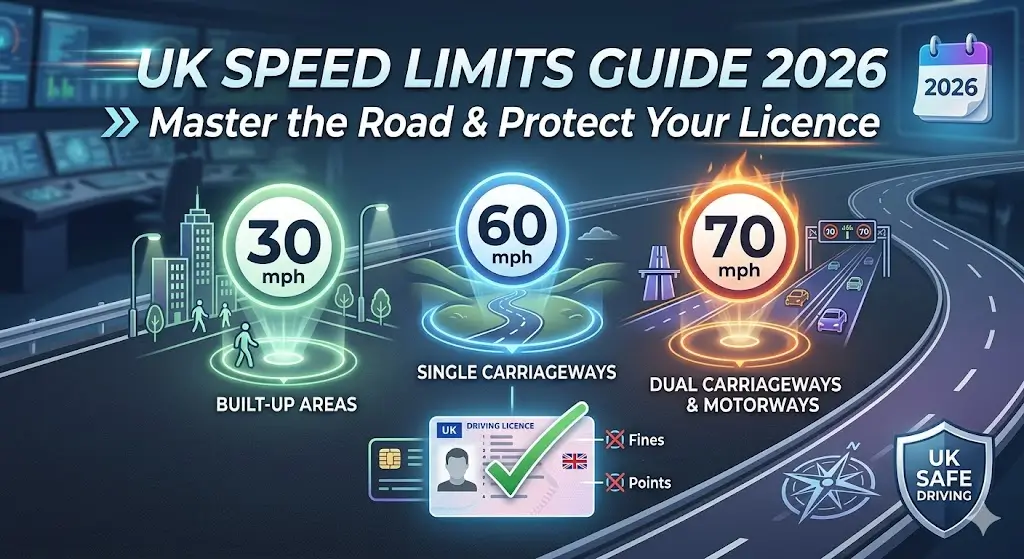
To know about speed limits is a key point of safe driving. It is an important part of driving. It is useful for preparing theory tests and starting an intensive driving course. Understanding the difference between 60 mph and 70 mph roads can stop you from getting fines and points. It also saves you from losing your license.
In this short information, we will discuss every road type in the UK. We will also cover the rules, your competitors don’t notice.
1. What is the National Speed Limit (NSL)?
This is a white circular sign with a black dots. But the actual speed limit is depending on the road you drive on it:
Built-up areas: 30 mph (if there are street lights and no other signs)
Single roads: 60 mph for cars
Dual roads and motorways: 70 mph for cars 
2. Single vs. Dual Carriageway: Don't Make This Mistake
Many learners get confused between a wide single road and a dual road.
- Single carriageway: Speed limit sixty mph. There is no divider in the middle. Cars go both ways on the same road.
- Dual carriageway: Speed limit seventy mph. There is a divider (barrier or grass) in the middle. Cars go on two separate sides.
3. Speed Restrictions & Minimum Speed Limits
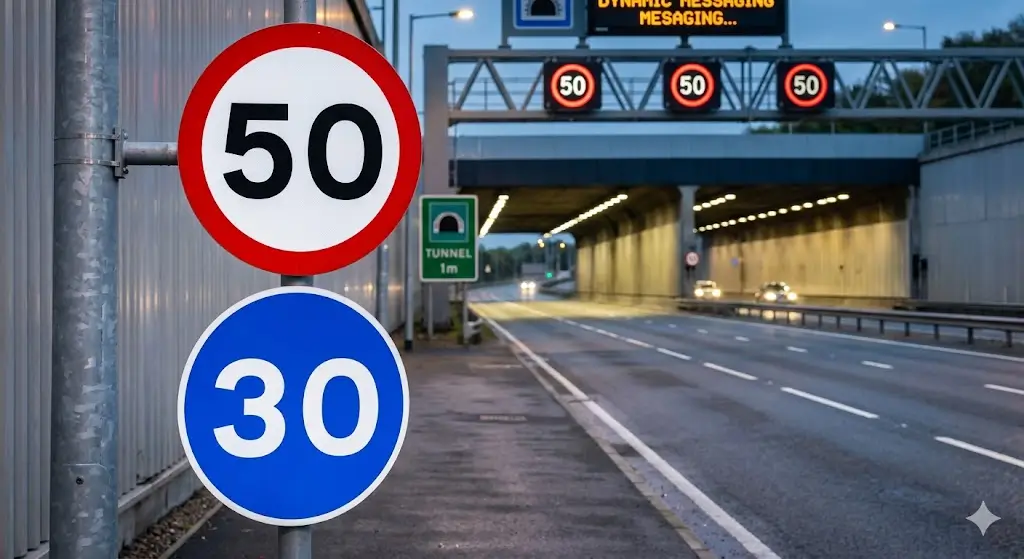
- Speed limits on UK roads: Always watch for round signs with a red corner. A blue sign with a white number shows the minimum speed. These signs are in tunnels to make sure cars keep going.
- Variable speed limits: On smart motorways, speed limits can change. They are shown on signs above the road to control traffic and keep it safe. These are legally binding and often enforced by cameras.
4. Advanced Safety: What You Need to Know in 2026
We’ve added the technical details that most blogs ignore:
- ISA (Intelligent Speed Assistance): From 2024, new UK cars can warn you or slow down if you go too fast.
Stopping Distances: At the highest speed limit is seventy mph. A car needs about ninety-six meters to stop. This length is near a football field! - Speeding fines: The smallest fine is hundred£ and three points. In serious cases, the fine can be very high. It can be up to one hundred and seventy-five percent of your weekly income.
5. Summary Table: UK Speed Limits at a Glance
Road Type | Speed Limit (Cars) | Key Identifier |
Built-up Area | 30 mph | Street lights present |
Single Carriageway | 60 mph | No central barrier |
Dual Carriageway | 70 mph | Central reservation present |
Motorway | 70 mph | Blue signs/High-speed |
Conclusion
Mastering the United Kingdom speed limits is essential for any learner driver. If you want to pass your test quickly and safely, our local instructors at Intensive Driving Courses UK specialise in teaching you these nuances on real test routes.
About Us
We believe driving lessons should be fun, relaxing and relaxing. No matter if you’re a total beginner or returning from a break our knowledgeable staff is ready to assist you each step of the process.

Subscribe To Our Newsletter
Join hundreds of confident drivers who chose Elevate — book your first lesson now and take the wheel with confidence!


Learn how to drive safely in automatic or manual cars. Your journey begins right here!
Contact
Support
Copyright © 2025 Alfa Digital Solutions